
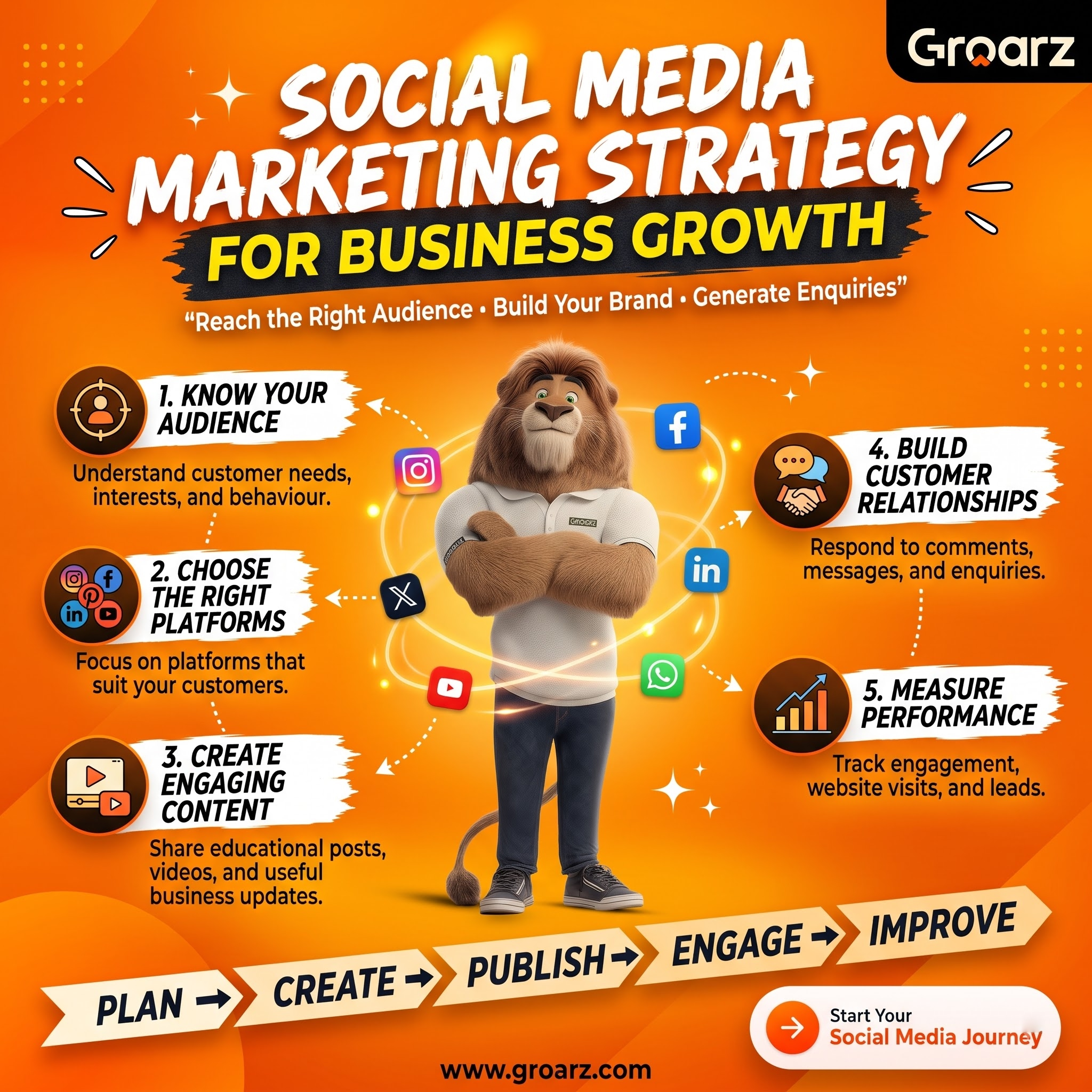
Social media marketing in Nagercoil helps local businesses connect with potential customers, build brand awareness, showcase their products and services, and generate business enquiries. Platforms such as Instagram, Facebook, and LinkedIn give businesses practical ways to share useful content, communicate with audiences, and promote their offerings online.
Whether you own a retail shop, run a construction company, manage a dental clinic, or operate a startup, social media can support your business growth when used with a clear strategy.
However, successful social media marketing involves more than publishing occasional posts. Businesses need to understand their target audience, select suitable platforms, create relevant content, and measure performance consistently.
In this guide, we explain how social media marketing works, which platforms may suit your business, what content you should publish, and how to use social media marketing in Nagercoil to reach the right audience.
What Is Social Media Marketing?
Social media marketing is the process of using social networking platforms to promote a business, communicate with customers, share valuable information, and achieve marketing objectives.
It includes both organic activities, such as regular posts and audience engagement, and paid campaigns designed to reach selected audiences.
A social media marketing strategy usually includes:
- Understanding your target audience.
- Choosing the right social media platforms.
- Planning posts, videos, and other creative content.
- Maintaining a consistent publishing schedule.
- Responding to comments and messages.
- Running paid campaigns when appropriate.
- Tracking engagement, website visits, and enquiries.
For example, a home construction company in Nagercoil could share house design ideas, construction progress, material selection tips, and project photographs. A local restaurant could publish menu highlights, food photographs, special offers, and customer updates.
Both businesses use social media, but their content strategies differ because their audiences and business goals are different.
The purpose is not simply to gain followers. It is to build meaningful connections with people who may eventually become customers.
Why Is Social Media Marketing Important for Businesses in Nagercoil?
Customers often use social media to discover businesses, explore products, compare services, and learn more about brands before making a decision.
For businesses in Nagercoil and the wider Kanyakumari district, social media provides an opportunity to communicate with local audiences and demonstrate what makes their services useful.
Build brand awareness
People cannot consider your business if they do not know it exists. Regular, relevant content helps introduce your business to potential customers and keeps your brand visible to people who follow or discover your page.
Showcase products and services
Photographs, short videos, demonstrations, and educational posts can help customers understand what you offer.
For instance, an interior design business can showcase room transformations, while a digital marketing company can explain SEO concepts through simple educational graphics.
Develop customer trust
Useful information, authentic project photographs, consistent communication, and genuine customer feedback can help people evaluate your business.
Avoid using fabricated reviews or misleading claims. Trust is built through accurate information and a consistent customer experience.
Encourage direct enquiries
Social media makes it convenient for interested customers to ask questions through messages, phone calls, website links, or WhatsApp where available.
Clear calls to action can guide people towards the next step, whether that means requesting a quotation, booking an appointment, or learning more about a service.
Support local business visibility
Businesses serving Nagercoil, Kanyakumari, and nearby towns can create content relevant to their service areas. Local references, useful community information, and accurate business details can make posts more relevant to their intended audiences.
Social media should complement other marketing activities, including website development, local SEO, and search advertising. It is most effective when every channel supports a clear business objective.
Which Social Media Platforms Should Your Business Use?
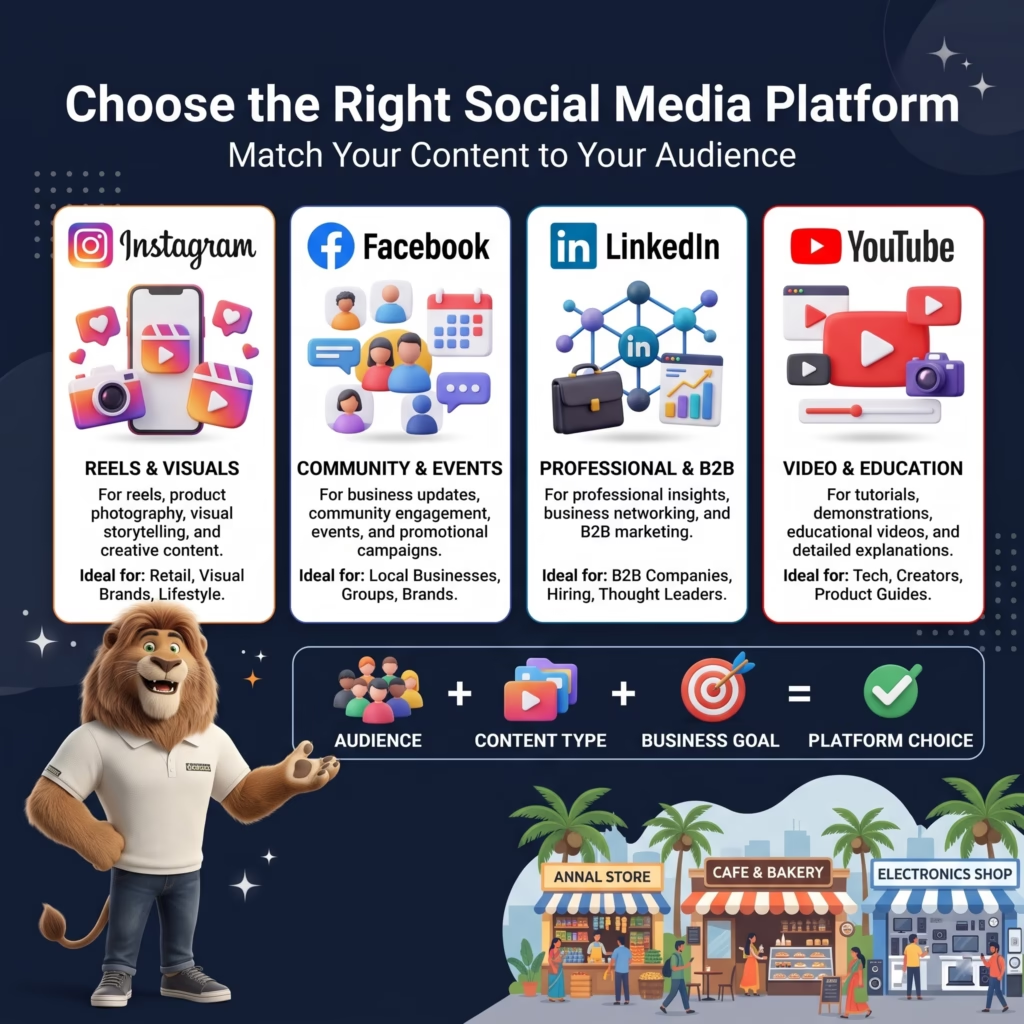
Not every business needs to maintain an active presence on every platform. Choose platforms based on your audience, content format, industry, and available resources.
Instagram marketing
Instagram is useful for visually demonstrating products, services, projects, and brand personality.
Businesses can use Reels, Stories, carousels, photographs, and educational posts to communicate with audiences.
Instagram may suit:
- Fashion and retail businesses.
- Restaurants and food brands.
- Interior designers and construction companies.
- Beauty and wellness businesses.
- Creative professionals and local service providers.
For example, a construction company could publish short videos explaining home design features or share photographs of completed projects.
Facebook marketing
Facebook can help businesses share updates, promote events, publish informative content, and communicate with local communities.
Depending on the audience, it may be suitable for retailers, restaurants, educational institutions, home service providers, and community-oriented businesses.
Facebook advertising also provides options for reaching selected audiences, subject to platform policies and campaign settings.
LinkedIn marketing
LinkedIn is particularly relevant for businesses targeting other businesses, professionals, and decision-makers.
A web development company, marketing agency, commercial construction firm, or business consultant can share industry insights, project updates, professional expertise, and company news.
YouTube marketing
YouTube can support businesses that benefit from longer demonstrations, tutorials, educational videos, and detailed explanations.
For example, a construction business could publish videos about the home-building process, while a marketing agency could explain website optimisation or advertising concepts.
How to select the right platform
Start with one or two platforms that suit your audience and that your team can manage consistently.
Consider these questions:
- Where does your target audience spend time online?
- Can you create content that fits the platform?
- What action do you want people to take?
- Can you respond to comments and enquiries promptly?
- Can you measure whether the platform contributes to your goals?
A focused presence on suitable platforms is often more practical than maintaining several inactive profiles.
What Services Does a Social Media Marketing Agency in Nagercoil Offer?
A social media marketing agency in Nagercoil may provide a combination of planning, content production, account management, advertising, and reporting.
The exact services depend on the agency and the requirements of your business.
Social media strategy and planning
Strategy development begins with understanding your business objectives, target customers, competitors, and brand positioning.
The resulting plan defines which platforms to use, what types of content to publish, how frequently to post, and how to evaluate performance.
Content creation and graphic design
Content creation can include social media graphics, carousels, promotional creatives, short videos, educational posts, captions, and campaign materials.
Content should reflect your brand identity and communicate information that matters to your audience.
Social media account management
Account management may include scheduling posts, maintaining content calendars, updating profile information, monitoring engagement, and coordinating responses to audience interactions.
Confirm which activities are included in an agency’s service agreement before signing a contract.
Paid social media advertising
Paid campaigns allow businesses to promote content or advertisements to selected audiences.
Campaigns may be used to increase awareness, attract website visitors, promote an offer, or generate enquiries. Performance depends on targeting, creative quality, budget, competition, and the strength of the offer.
Performance reporting
Reports help businesses understand what their social media activity is achieving.
Depending on campaign goals, reports may include reach, impressions, engagement, video views, link clicks, enquiries, and conversion data.
A useful report explains what the numbers mean and what should change in the next campaign.
Social Media Content Strategies for Local Businesses
Content is central to social media marketing. People are more likely to engage with material that informs, entertains, inspires, or helps them make a decision.
A practical content plan should balance different content types instead of publishing sales messages every day.
Educational content
Answer questions your customers frequently ask.
Examples include:
- Construction: What should you consider before building a house?
- Healthcare: What should patients know before a routine appointment?
- Retail: How can customers choose the right product?
- Digital marketing: Why does a business need a mobile-friendly website?
Educational content demonstrates expertise while providing genuine value.
Behind-the-scenes content
Show how your business works. You might introduce team members, demonstrate a process, share a workspace tour, or explain how a service is delivered.
Only publish photographs or videos when you have the necessary permissions.
Project and product showcases
Use high-quality photographs and videos to show real products, completed projects, or examples of your work.
For service businesses, visual proof can help customers understand the process and the standard of work they can expect. Describe projects accurately and obtain permission before sharing client information.
Frequently asked questions
Turn common customer questions into short videos, carousel posts, or simple graphics.
This approach can help explain pricing factors, service processes, appointment procedures, product features, or common misconceptions without requiring customers to search through lengthy pages.
Customer stories and feedback
With appropriate permission, share authentic customer feedback and experiences.
Explain the context clearly and avoid implying that one customer’s result is guaranteed for everyone.
Offers and promotional content
Promotional posts can highlight a seasonal offer, new product, upcoming event, or specific service.
Make the terms clear and ensure that any advertised offer is genuine and available.
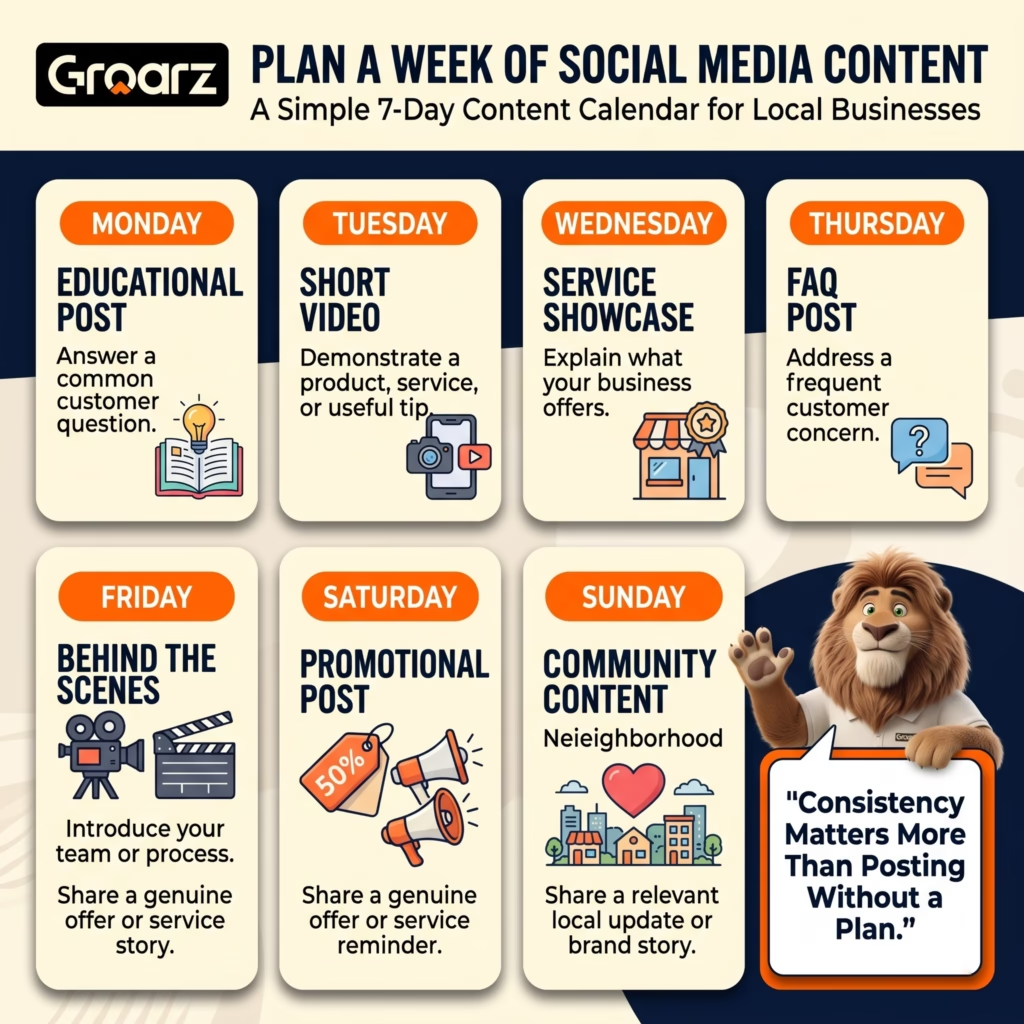
A simple weekly content calendar
| Day | Content idea | Objective |
| Monday | Educational carousel | Inform customers |
| Tuesday | Short video or Reel | Reach new audiences |
| Wednesday | Product or service showcase | Explain your offering |
| Thursday | FAQ post | Address customer concerns |
| Friday | Behind-the-scenes content | Build familiarity |
| Saturday | Relevant offer or service reminder | Encourage enquiries |
| Sunday | Community or brand update | Maintain relationships |
This is an example, not a mandatory posting schedule. Adjust the frequency to your resources and audience response. Publishing fewer high-quality posts consistently may be more useful than posting every day without a plan.
Organic Social Media Marketing vs Paid Advertising
Businesses can grow their social media presence through organic content, paid advertising, or a combination of both.
Organic social media marketing
Organic marketing involves publishing posts and engaging with audiences without paying for distribution of each post.
It can help businesses develop a recognisable brand, answer questions, maintain customer relationships, and build a library of useful content.
However, organic reach varies by platform, audience behaviour, and content performance. Consistent posting does not guarantee a specific number of views or enquiries.
Paid social media advertising
Paid advertising allows businesses to spend money to distribute campaigns to selected audiences.
It can be useful for promoting a new service, reaching potential customers in a defined area, testing offers, or generating enquiries through lead forms and landing pages.
Advertising requires careful planning. Businesses should monitor not only clicks and impressions but also lead quality, conversion rates, and costs.
Which option is right for your business?
| Factor | Organic marketing | Paid advertising |
| Primary purpose | Build presence and relationships | Extend reach and promote campaigns |
| Media budget | No payment required for organic distribution | Requires advertising spend |
| Content requirement | Consistent, relevant content | Strong creatives and clear campaign offers |
| Measurement | Reach, engagement, clicks, enquiries | Spend, clicks, conversions, cost per lead |
| Best approach | Long-term audience development | Targeted promotion and campaign testing |
For many local businesses, a combination is practical: use organic content to build credibility and paid campaigns when there is a clear offer or measurable objective.
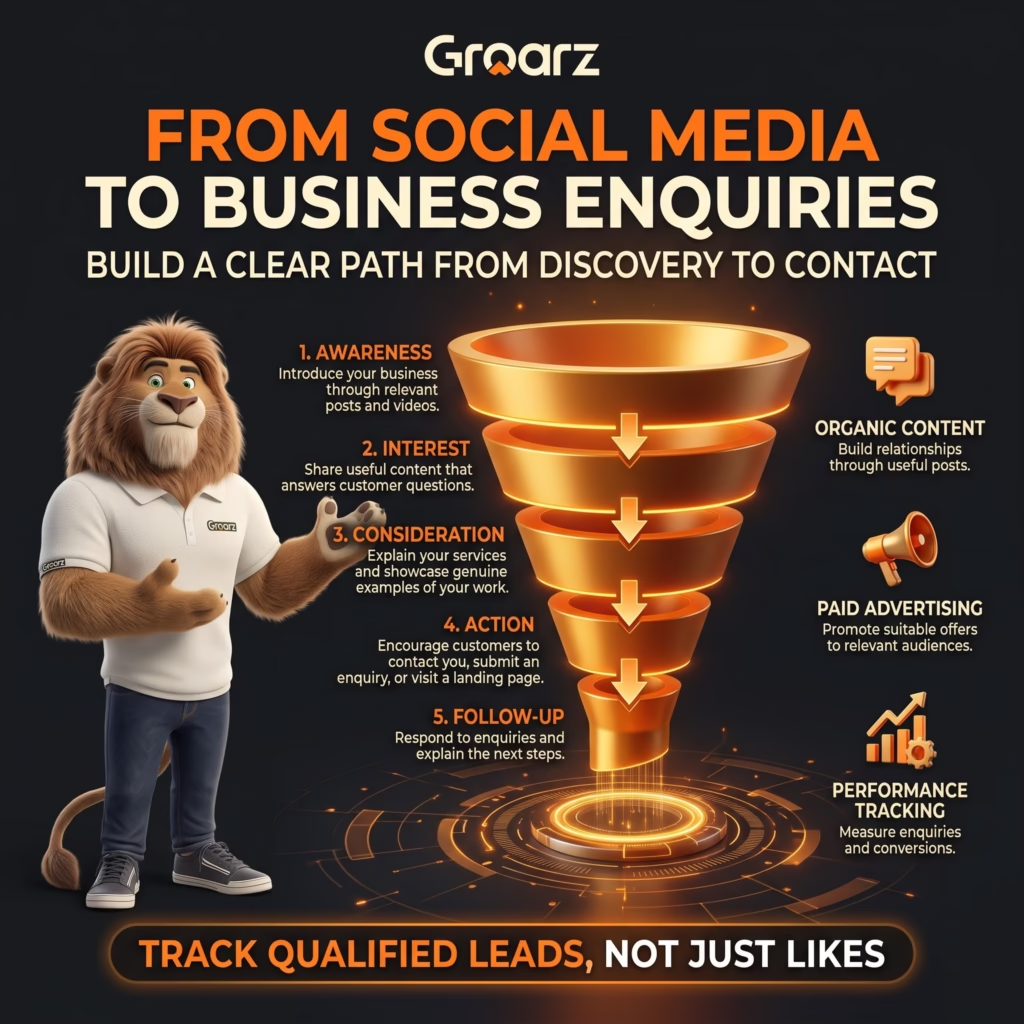
How to Generate Business Enquiries Through Social Media
Growing an audience is useful, but businesses also need a clear path from interest to enquiry.
Optimise your social media profiles
Make your business name, services, contact details, and service area easy to understand. Use a professional profile image, an appropriate cover image where applicable, and a clear description of what you offer.
Add a working website or contact link when relevant.
Use clear calls to action
Tell users what they can do next.
Examples include:
- Contact us to discuss your requirements.
- Send us a message for service details.
- Visit our website to explore our solutions.
- Request a quotation for your project.
- Book an appointment using our contact link.
Match the call to action to the purpose of the post.
Create dedicated landing pages
If a campaign promotes a particular service, direct users to a relevant website page rather than always sending them to the homepage.
A useful landing page should explain the offer, provide relevant details, answer common concerns, and make contacting your business straightforward.
Respond to enquiries promptly
Create a process for monitoring messages, responding to questions, and following up with interested customers.
An advertising campaign may attract enquiries, but the business still needs to qualify leads, provide accurate information, and deliver a good customer experience.
Track meaningful results
Use available platform insights, website analytics, and appropriate conversion tracking to understand which campaigns contribute to enquiries.
Where possible, record lead sources and assess whether enquiries are relevant to your services. This helps you allocate your budget based on evidence rather than engagement numbers alone.
How to Choose a Social Media Marketing Strategy for Your Business
Before investing in social media marketing in Nagercoil, establish a plan that matches your business objectives and resources.
Step 1: Define a measurable objective
Decide whether your priority is brand awareness, website visits, enquiries, appointments, or sales.
A clear objective makes it easier to choose content formats and evaluate campaign performance.
Step 2: Understand your customers
Identify your audience’s needs, questions, interests, location, and buying considerations.
For a local service provider, this may involve understanding which services customers request most often and what information they need before making contact.
Step 3: Research competitors
Review how relevant competitors present their services, what types of content they publish, and how they communicate with audiences.
Use competitor research to identify opportunities to offer clearer information or more helpful content. Do not copy their creative work or make unsupported comparisons.
Step 4: Plan content and advertising
Create a realistic content calendar and decide whether paid campaigns are necessary.
Plan content around customer questions, service benefits, real business activities, and relevant seasonal events. Set a separate advertising budget if paid promotion is part of the strategy.
Step 5: Review performance regularly
Review results at suitable intervals and compare them with your original objectives.
Identify which posts attract relevant engagement, which campaigns produce useful enquiries, and which activities need improvement. Use the findings to refine your next content plan.
A good strategy should be flexible enough to change when customer behaviour or business priorities change.
Common Social Media Marketing Mistakes to Avoid
Businesses can waste time and money when social media activity lacks direction.
Posting without a clear objective: Every post does not need to sell something, but your overall content plan should support a business or customer communication goal.
Choosing platforms without understanding your audience: A platform’s popularity does not automatically make it suitable for your business.
Focusing only on follower count: Followers do not necessarily represent potential customers. Pay attention to relevant engagement, enquiries, and conversions.
Using low-quality or misleading content: Poor visuals, inaccurate claims, and copied material can damage credibility. Prioritise original content and factual information.
Ignoring messages and comments: Unanswered questions may prevent interested users from becoming customers. Establish a process for managing interactions.
Running advertisements without tracking conversions: Clicks alone cannot show whether campaigns are generating valuable business results. Set up suitable tracking before judging performance.
Expecting immediate results: Building a recognisable brand and understanding what resonates with your audience takes testing and consistency. Avoid treating early performance as a guarantee of future results.
Ignoring website and contact experience: Social media may introduce people to your business, but a confusing website or difficult enquiry process can interrupt their journey.
Avoiding these mistakes helps businesses build a more consistent and measurable social media presence.
Conclusion: Build Your Business Presence with Social Media Marketing in Nagercoil
Social media marketing gives businesses in Nagercoil an opportunity to connect with audiences, communicate their expertise, showcase products and services, and encourage potential customers to make contact.
The most effective approach begins with understanding your audience and choosing suitable platforms. From there, businesses can develop useful content, maintain consistent communication, test paid campaigns where appropriate, and measure results against clear objectives.
Success does not depend on posting constantly or collecting the largest number of followers. It depends on sharing relevant information, building trust, and creating a convenient path from discovering your business to contacting you.
If your business wants to improve its social media presence, Groarz can help you explore digital marketing and website development solutions suited to your goals.
Ready to improve your business’s online presence?
Visit Groarz to discuss social media marketing, content planning, digital advertising, and website development for your business.
Let’s explore a practical strategy to help your business connect with the right audience.
Frequently Asked Questions About Social Media Marketing in Nagercoil
1. What is social media marketing in Nagercoil?
Social media marketing in Nagercoil involves using platforms such as Instagram, Facebook, and LinkedIn to promote businesses, share useful content, engage local audiences, and generate enquiries from potential customers.
2. How much does social media marketing cost in Nagercoil?
The cost depends on the number of platforms, content requirements, creative production, account management, and advertising budget. Ask for a proposal that separates management fees from paid advertising expenses.
3. Which social media platform is best for a small business?
The best platform depends on your target audience, industry, content format, and goals. Instagram may suit visual businesses, Facebook can support community-focused communication, and LinkedIn may be appropriate for business-to-business marketing.
4. Can social media marketing help generate leads?
Yes. Businesses can generate enquiries through targeted advertising, useful content, clear calls to action, lead forms, website landing pages, and direct messages. Results depend on the offer, audience, budget, and follow-up process.
5. How often should a business post on social media?
Posting frequency depends on the platform, audience, and available resources. Start with a manageable schedule, publish useful content consistently, and adjust frequency based on engagement and business results.
6. Is paid advertising necessary for social media marketing?
No. Businesses can begin with organic content and audience engagement. Paid advertising may be useful when a business wants to promote a specific offer, reach selected audiences, or test a lead generation campaign.
7. How long does social media marketing take to show results?
Timelines vary according to content quality, audience, competition, consistency, and campaign objectives. Paid campaigns may generate early engagement or enquiries, while building brand recognition and an active audience can take longer.
8. Why should local businesses hire a social media marketing agency in Nagercoil?
A suitable agency can help with strategy, content planning, creative production, account management, advertising, and reporting. Businesses should evaluate an agency’s relevant experience, deliverables, communication, and approach to measuring results.
9. How can I measure social media marketing performance?
Track metrics that match your objectives, including reach, engagement, video views, website clicks, enquiries, conversions, and advertising cost per lead where relevant. Assess lead quality as well as volume.
10. How can Groarz help with social media marketing?
Groarz offers digital marketing services that businesses can explore to strengthen their online presence. Contact Groarz to discuss your social media goals, content needs, advertising requirements, and how these activities can fit into your wider digital marketing strategy.