
When people need a product or service, many begin by searching on Google. They may look for a nearby shop, a construction company, a dental clinic, a restaurant, or a professional service provider. If your business website does not appear prominently for relevant searches, potential customers may discover your competitors first.
This is where SEO services in Nagercoil can help. Search engine optimisation improves a website’s ability to appear in relevant organic search results. It involves understanding what customers search for, improving website content, addressing technical issues, and strengthening local search visibility.
For businesses in Nagercoil and the surrounding Kanyakumari district, SEO can support long-term online visibility and help potential customers find useful information about their services.
In this guide, we explain the main SEO services, how local SEO works, which performance indicators to track, and how businesses can build a practical search optimisation strategy.
What Are SEO Services?
SEO services involve improving a website so that search engines can understand its pages and users can find relevant information more easily.
SEO is not just about adding keywords to a website. It combines technical improvements, useful content, website structure, local visibility, and ongoing performance analysis.
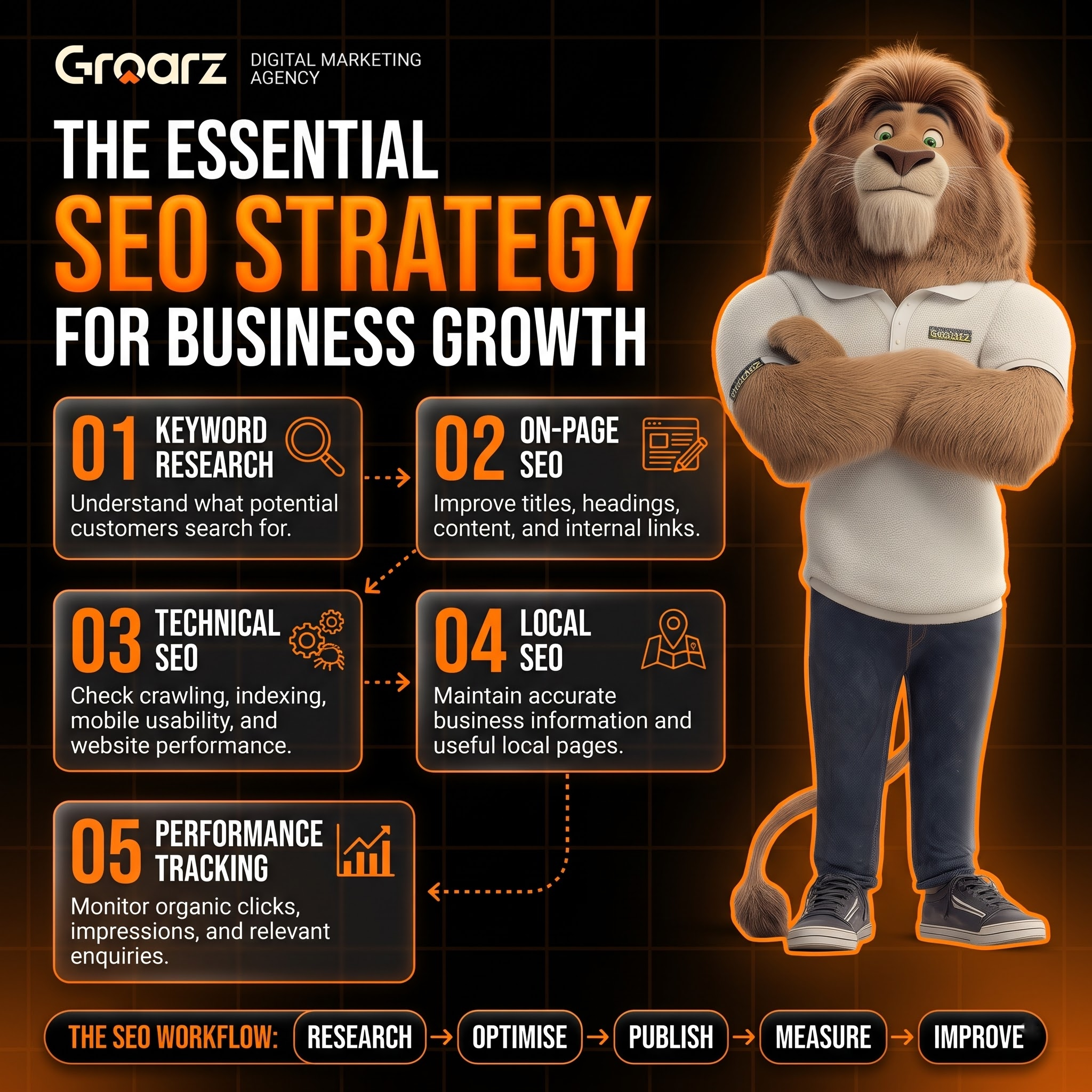
Common SEO activities include:
- Keyword research to understand what potential customers search for.
- On-page optimisation of page titles, headings, content, and internal links.
- Technical SEO to identify crawling, indexing, mobile usability, and website performance issues.
- Local SEO to improve visibility for location-based searches.
- Content planning to answer customer questions and address search intent.
- Performance monitoring through tools such as Google Search Console and website analytics.
The right combination depends on the website’s current condition, competition, business goals, and target audience.
Why Do Businesses in Nagercoil Need SEO?
Nagercoil has businesses across several sectors, including healthcare, construction, education, retail, hospitality, and professional services. Customers may search online before visiting a business or contacting a service provider.
A well-planned SEO strategy helps businesses make their websites more discoverable when people search for relevant products or services.
1. Improve organic search visibility
SEO helps search engines understand which queries your website may be relevant for. For example, a business may want to reach people searching for a specific service in Nagercoil rather than attracting visitors who are unlikely to become customers.
Ranking improvements are not guaranteed, but a properly maintained website can build stronger organic visibility over time.
2. Reach people with relevant needs
A person searching for a specific service often has a clearer purpose than someone casually browsing social media. Creating useful pages that match the searcher’s needs can help your business connect with a more relevant audience.
3. Support local customer discovery
Local SEO helps businesses provide accurate information about their location, services, opening hours, and contact details. This can make it easier for nearby customers to assess whether a business meets their needs.
4. Build trust through useful information
Clear service descriptions, helpful articles, accurate business information, and easy navigation can help visitors understand what your business offers.
SEO alone does not establish trust. Your website should also provide genuine business details and accurate information that visitors can verify.
5. Build a long-term digital marketing foundation
Paid advertising can bring visitors while campaigns are active. SEO focuses on improving organic visibility and can support ongoing discovery when pages continue to meet users’ needs. SEO still requires regular work, and results depend on many factors.
What SEO Services Should a Business Consider?
Not every website needs the same SEO plan. A local service provider may need stronger location pages, while a larger website may require technical fixes, content improvements, or a broader keyword strategy.
Keyword research
Keyword research identifies the words and phrases people use when looking for products, services, and information.
For example, a Nagercoil business might research phrases such as:
- SEO services in Nagercoil
- SEO company in Nagercoil
- Local SEO services in Nagercoil
- Website optimisation services
- SEO for small businesses
- Search engine optimisation services
These are examples to investigate, not claims about search volume or ranking difficulty. Actual keyword choices should be based on keyword data, search intent, competition, and business relevance.
A good keyword plan assigns a primary topic to each important page. This helps reduce unnecessary overlap between pages targeting similar searches.
On-page SEO
On-page SEO improves the content and HTML elements of individual website pages.
It may include:
- Writing clear and relevant SEO titles.
- Creating useful meta descriptions.
- Organising content with descriptive headings.
- Including relevant keywords naturally.
- Improving image alt text where appropriate.
- Adding internal links to related pages.
- Matching page content to the visitor’s search intent.
For example, a service page should explain what the service involves, who it helps, how the process works, and how a customer can enquire. Repeating the same keyword unnaturally does not make a page more useful.
Technical SEO
Technical SEO focuses on issues that can affect how search engines access, crawl, index, and interpret a website.
A technical review may examine:
- Indexing and crawlability.
- XML sitemaps and robots directives.
- Broken links and redirect problems.
- Duplicate pages and canonical tags.
- Mobile usability and page experience.
- Page loading performance.
- Website security and HTTPS.
- Structured data where relevant and correctly implemented.
Technical SEO should be prioritised according to the actual issues found on the website. Adding technical elements without a clear purpose is not a substitute for fixing real problems.
Content SEO
Content SEO involves planning and improving website content around customer needs and relevant search topics.
Useful content can include service pages, local landing pages, educational articles, comparison guides, and answers to common customer questions.
For example, a business could create an article that explains how to evaluate a service, what questions to ask before hiring a provider, or which factors customers should consider before making a decision.
The aim is to provide accurate, original, genuinely useful information—not to publish many pages that repeat the same points.
How Local SEO Helps Businesses in Nagercoil
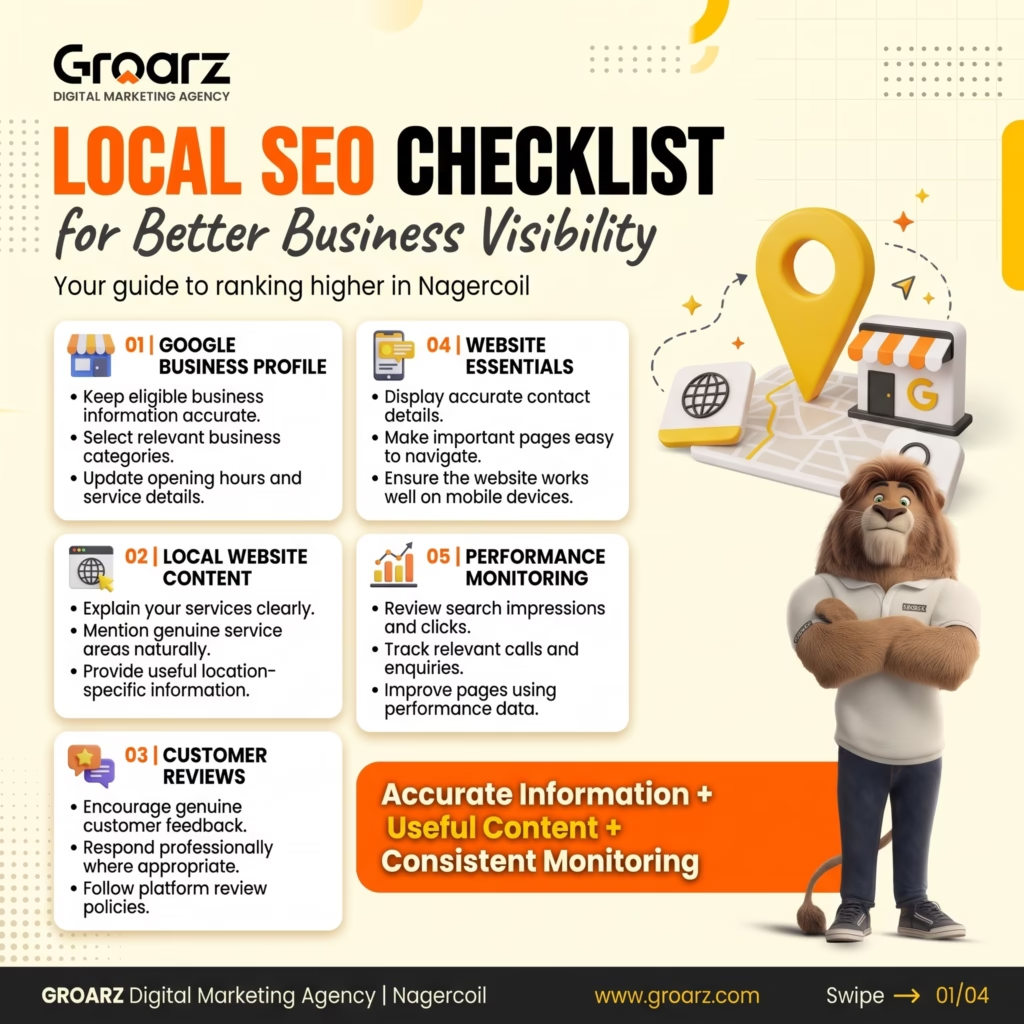
Local SEO focuses on improving a business’s visibility for relevant searches with a geographic connection. It can be important for businesses that serve customers in Nagercoil and nearby areas.
Optimise your Google Business Profile
An eligible local business can use its Google Business Profile to provide accurate business information. Depending on the business, useful details may include its name, address or service area, phone number, hours, website, and service categories.
Keep the information consistent with your real business details. Avoid creating duplicate profiles or using misleading locations to target areas you do not genuinely serve.
Create useful local service pages
A location-focused page should explain the services available to customers in that area. It should provide meaningful information instead of simply replacing a city name across multiple near-identical pages.
For example, a business serving Nagercoil and other parts of Kanyakumari district should clearly explain its actual service coverage and the services available to customers.
Keep business information accurate
Your website and business listings should provide consistent contact details wherever practical. Accurate information helps customers contact you and reduces confusion about your location or services.
Encourage genuine customer reviews
Reviews can help people evaluate a local business. Follow the relevant platform’s policies when asking customers for feedback. Do not buy reviews, fabricate testimonials, or offer prohibited incentives.
Local SEO is a combination of accurate business information, useful location content, customer experience, and ongoing profile management. No single action guarantees a top position in local results.
Content Marketing and Keyword Research
Content and keyword research work together. Keyword research helps identify customer questions, while content planning turns those questions into useful pages and articles.
A practical process is:
- Identify your main services and the customers you want to reach.
- Research relevant search terms using available keyword tools.
- Group related keywords by search intent.
- Assign each group to an appropriate existing or new page.
- Create content that answers the user’s question clearly.
- Link related articles and service pages where it helps the reader.
- Review performance and update content when necessary.
For example, an SEO service page can explain the services offered, while a supporting blog can answer a more specific question about website optimisation. Linking the two pages can help readers move from learning about a topic to exploring a relevant service.
How to Measure SEO Performance
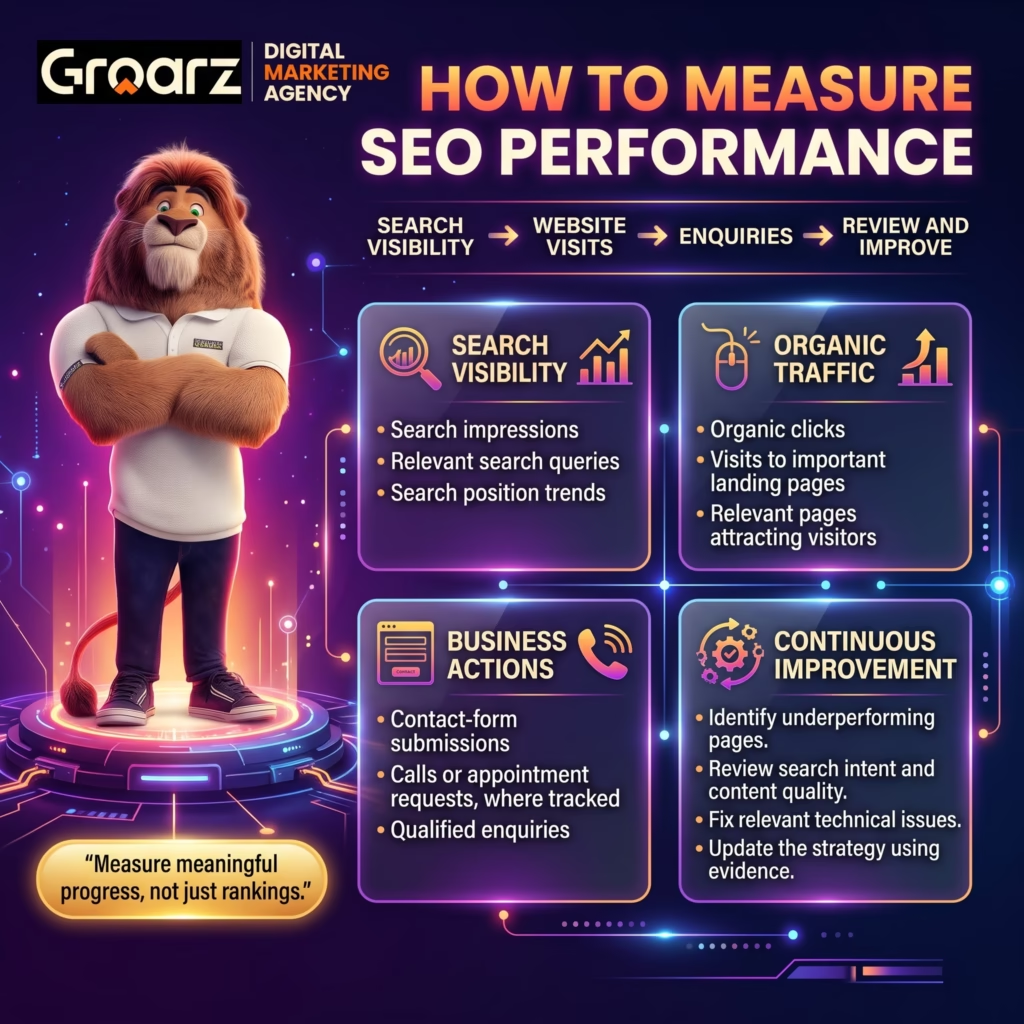
SEO should be evaluated using meaningful performance indicators rather than rankings alone.
Organic clicks and impressions
Google Search Console can show how often your website appears in Google Search and how many clicks it receives. Reviewing queries and pages can help you understand which topics attract visibility.
Relevant website visits
Website analytics can help you assess whether organic visitors are reaching important pages and taking useful actions.
Enquiries and conversions
Depending on your business, useful actions may include phone calls, enquiry-form submissions, appointment requests, or qualified leads. Tracking these actions provides more business context than traffic numbers alone.
Keyword and page performance
Track a selected group of relevant keywords and important landing pages over time. Search positions can change, so interpret rankings alongside impressions, clicks, enquiries, and business goals.
SEO results can take time, and the timeline varies according to competition, website condition, content quality, and the work required. Avoid relying on guaranteed ranking promises or a fixed results timeline.
Common SEO Mistakes to Avoid
Some SEO practices can waste resources or make a website less useful.
Keyword stuffing: Repeating the same phrase excessively can make content unnatural. Use keywords where they fit the topic and write for readers first.
Publishing thin content: Pages with little useful information may not satisfy visitors. Give each page a clear purpose and enough relevant detail to serve that purpose.
Ignoring technical issues: Broken links, accidental indexing blocks, or duplicate URLs can create problems that content changes alone will not resolve.
Creating duplicate location pages: Replacing only the city name across multiple pages does not provide meaningful local value. Include accurate and useful information for each area you genuinely serve.
Buying backlinks or using spam tactics: Manipulative link schemes can put a website at risk. Focus on relevant content, legitimate relationships, and practices that follow search engine guidelines.
Ignoring measurement: Without tracking, it can be difficult to understand which activities are helping. Establish a baseline and review performance consistently.

How to Choose an SEO Strategy for Your Business
Before investing in SEO, clarify what you want the website to achieve. A local shop may want more nearby visitors, while a service company may focus on qualified enquiries or consultation requests.
Consider these steps:
- Review the existing website. Identify important pages, technical issues, content gaps, and current search performance.
- Set clear business goals. Decide whether the priority is relevant traffic, local discovery, enquiries, or another measurable outcome.
- Prioritise opportunities. Focus first on improvements that are relevant to your business and supported by evidence.
- Plan content and optimisation. Assign keywords to appropriate pages and create content that addresses real customer needs.
- Measure and refine. Review results regularly and adjust the plan based on the data.
A suitable SEO plan should be transparent about the work involved, the metrics being tracked, and the limitations of search optimisation.
Conclusion
SEO helps businesses make their websites easier to discover, understand, and use. For businesses in Nagercoil, a practical strategy may combine keyword research, useful content, technical improvements, local SEO, and consistent performance tracking.
The most effective starting point is to understand your current website, identify the customers you want to reach, and prioritise improvements based on evidence rather than ranking promises.
If your business is exploring SEO services in Nagercoil, visit Groarz to learn more about its digital marketing services and discuss your website’s requirements.
Call Groarz at +91-7904759271 or request a free estimate online.
Frequently Asked Questions About SEO Services in Nagercoil
1. What are SEO services in Nagercoil?
SEO services in Nagercoil involve improving a website’s search visibility for relevant products, services, and location-based queries. They can include keyword research, on-page optimisation, technical SEO, content planning, and local SEO.
2. Why is SEO important for a local business?
SEO can help potential customers discover a business through relevant organic searches. It also supports clearer website content and better alignment between customer questions and the information a business provides.
3. What is the difference between SEO and local SEO?
SEO covers improvements intended to help a website perform in relevant organic search results. Local SEO focuses on searches with a geographic connection and may include Google Business Profile management, local pages, and accurate business information.
4. How long does SEO take to show results?
The time required varies depending on competition, website condition, content quality, and the scope of work. SEO is an ongoing process, and no provider can responsibly guarantee a particular ranking or timeline.
5. Can SEO help small businesses in Nagercoil?
Yes. SEO can help small businesses make their services easier to discover online. The best approach depends on the business’s audience, location, website, competition, and goals.
6. What does an SEO service typically include?
SEO services may include keyword research, website audits, on-page optimisation, technical improvements, content planning, local SEO, internal linking, and performance reporting. The exact scope should be agreed upon before work begins.
7. Is SEO better than paid advertising?
They serve different purposes. Paid advertising can provide visibility while a campaign is active, while SEO focuses on organic search visibility over time. Some businesses use both, depending on their goals and budget.
8. How can I measure SEO performance?
Use tools such as Google Search Console and website analytics to review organic clicks, impressions, landing-page visits, and meaningful actions such as enquiries or calls. Measure performance against your business objectives.
9. Does a business need a website for local SEO?
A website can provide detailed information about services and help customers take action. Eligible businesses can also manage a Google Business Profile, but the right setup depends on the business type and Google’s eligibility rules.
10. How can Groarz help with SEO?
Groarz can be approached to discuss SEO and digital marketing requirements for a business. Start by reviewing your website, identifying your goals, and asking which optimisation activities and performance indicators would be relevant to your situation.